
What happens when you owe more than your car is worth?
- Published On
- November 16, 2026
- Category
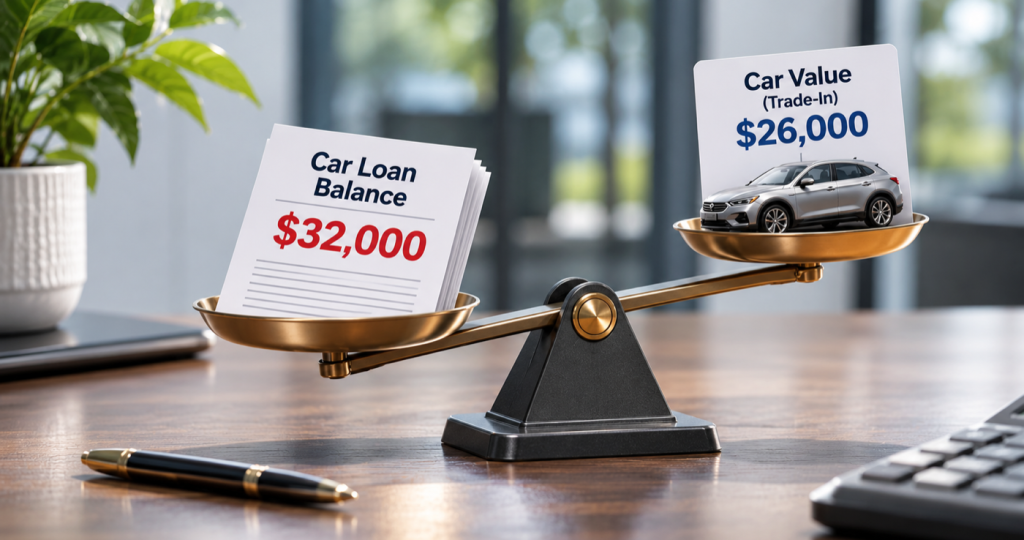
You’re starting a new job and have decided it’s time for a new car. You find one you like, and the dealer offers you $20,000 on your trade-in. Sounds good? But there’s one issue: You still owe $28,000 on your current vehicle.
That leaves an $8,000 difference not covered in your trade-in. So, what happens to it? That debt doesn’t disappear when you hand over the keys. If you are not paying off that outstanding amount, it’s added to your next car loan. This means you’ll need to borrow more to cover the difference, paying interest on an even larger loan and possibly taking longer to pay it off.
If you trade in again before that loan is paid off, the remaining debt could carry over to another vehicle, creating a cycle of debt that becomes harder to escape with each purchase.
What is negative equity?
That $8,000 is called negative equity, meaning you owe more on the vehicle than it’s currently worth.
You can pay the $8,000 off yourself, or, depending on the financing arrangement, it may be added to the amount you borrow for your next vehicle. This means you will now be rolling the negative equity into a new loan.
What does that mean for your next vehicle?
Let’s say your next vehicle costs $35,000. If the $8,000 you still owe on your current vehicle is rolled into the new loan, you would be borrowing $43,000 before taxes, fees and other costs are added.
That means you’re buying a $35,000 vehicle but taking on a much larger loan. You’ll also be paying interest on the amount you still owe from your previous vehicle.
Don’t focus only on the payment
When you’re borrowing more than the price of your new vehicle, it’s especially important to look beyond the monthly or biweekly payment. Consider the total amount financed, interest charges and the overall cost of your loan before signing.
A dealer may offer a longer loan term to make your monthly payments more manageable. While those payments may fit your budget, spreading the loan over more years could mean paying more interest and spending more on the vehicle overall.
Before agreeing to a new loan, ask how much you’re borrowing, how long you’ll be making payments and how much you’ll pay in total, including interest and any fees.
Know the full picture before you sign
Before shopping for your next vehicle, find out exactly how much you still owe on your current loan and get an idea of what your vehicle may realistically be worth.
If you owe more than your vehicle is worth and can’t afford to pay the difference upfront, you may be able to add that amount to your new loan. However, this means borrowing more and potentially paying more interest over time.
- How much will I still owe on my current loan after the trade-in?
- Is it being added to my new financing?
- If I can’t pay that amount upfront, can it be added to my new financing?
- What is the total cost of my new loan, including interest?
Make sure you understand the answers before you sign.
Before you trade in.
A trade-in offer is only one part of the deal. Know what you owe. Understand what you’re borrowing. Be clear about any debt you may be carrying into your next vehicle. And before you sign, make sure you understand the full agreement, including the financing terms, total cost and your car-buying rights.